Wren Default
dialogues/institute/wren_default.dialogue
Personajes
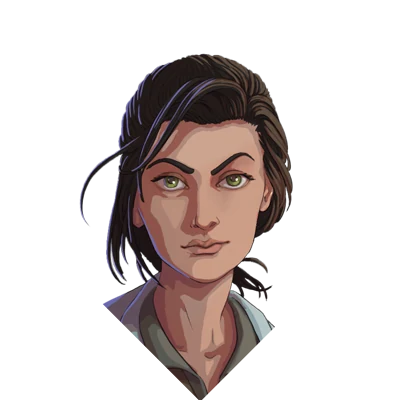
~ start
Wren looks up from her work, setting down her tools.
Questions about my research? I'm happy to help.
cells_questioninstitute_questionemma_shamans_questionBack to work, then.
fin~ repeat_questions
What else would you like to know?
cells_questioninstitute_questionemma_shamans_questionBack to work, then.
fin~ cells_question
Her eyes light up with genuine enthusiasm.
CELLs are my primary research focus. Fascinating devices - metallic construction, about this size.
She gestures with her hands, indicating something roughly the size of a lunchbox.
They all have those "CE" markings. When active, they emit a low-frequency hum. You can feel the vibration if you stand close enough.
She leans forward, her voice dropping slightly.
Here's what makes them dangerous: we've tried opening them. Multiple times over the years. Every attempt ended in violent explosions.
Her expression darkens.
We've lost people that way. Now Institute protocol forbids any invasive examination. We study them externally only.
She pulls out her notebook, flipping to a map with marked locations.
There are maybe fifteen to twenty in the entire region. And that's it. No reports from other regions.
This appears to be a localized phenomenon, which raises so many questions about origin and purpose.
Her scientific curiosity overtakes her caution.
What fascinates me most is their selectivity. They generate enormous power - enough to run entire communities. But try using one for weapons manufacturing or surveillance systems, and it stops functioning. Dies completely.
Almost like they have preferences. Like they choose what they'll power. That's not how technology should work, which means we're missing something fundamental about what they are.
She returns to her notes, unable to hide her excitement.
If we could understand them - truly understand their construction, their power source - we could replicate the technology. Imagine that. Unlimited clean energy for everyone.
A pause.
That's what drives my research. Not just cataloging artifacts, but understanding them well enough to help people.
repeat_questionsBack to work, then.
fin~ institute_question
She sets down her pencil, thoughtful.
The Institute preserves knowledge that would otherwise be lost. Pre-war books, technical documentation, medical procedures - things humanity needs to rebuild properly.
Pride shows in her voice.
We maintain the largest library in the region. Thousands of books, journals, technical manuals. All cataloged, protected, available for study.
She gestures around her makeshift camp.
I know we have... structural issues. Hierarchy can be rigid. Some researchers, like Keahi, are more concerned with protocols than collaboration.
She shrugs slightly.
But structure keeps us focused. Without it, knowledge gets scattered, lost again. Someone has to maintain standards.
Her tone becomes more defensive.
People criticize our Sentinels - our military wing. But field research is dangerous. Raiders, hostile wildlife, territorial disputes... we need protection.
She meets your eyes earnestly.
The Sentinels protect researchers and artifacts. They've saved my life twice in the field. That's not oppression, that's necessity in a dangerous world.
A slight pause, discomfort flickering across her face.
I know some of our methods are harsh and sometimes acquisitions feel like theft.
But the knowledge we save, the techniques we preserve - they justify difficult choices. We're trying to prevent another dark age. Sometimes that requires sacrifices.
She returns to her work, clearly wanting to move past this topic.
Not everyone shares my approach. Some are more rigid about who deserves access to knowledge. But I believe our mission is noble, even if execution isn't always perfect.
repeat_questionsBack to work, then.
fin~ emma_shamans_question
A faint color touches her cheeks when you mention Emma's name.
Emma Yazzie is... remarkable. She's kept traditional medicinal practices alive through oral tradition and careful teaching.
She catches herself, becomes more professional.
The Techno-shamans have preserved knowledge that pre-war science dismissed. Herbal remedies, environmental observation techniques, sustainable practices. There's real value there.
Scientific curiosity overtakes her personal feelings.
What fascinates me is their rituals. I've observed some of their ceremonies - with permission, of course. There are measurable phenomena. Electromagnetic fluctuations, atmospheric changes, effects on nearby technology.
She leans forward, animated.
They call it communing with spirits. I call it interaction with observable forces we don't fully understand yet. Maybe we're studying the same thing from different angles.
She absently touches a small woven bracelet on her wrist - clearly a gift.
Emma taught me that not all knowledge comes from books or laboratories. Sometimes understanding requires different perspectives, different languages for describing reality.
A soft smile.
She's patient with my questions. Doesn't dismiss scientific inquiry as disrespectful to tradition. That's... rare.
She returns to her notes, trying to refocus.
The Techno-shamans' approach to CELLs is different from ours, but they respect the technology. Use it carefully, sustainably. Their methods might seem mystical, but the results are consistent, repeatable. That's what matters scientifically.
She glances up.
We need more collaboration between Institute and Techno-shamans. Less territorial thinking. Knowledge grows when shared, not hoarded.
repeat_questionsBack to work, then.
finCódigo fuente del diálogo
~ start
Wren: *Wren looks up from her work, setting down her tools.*
	Questions about my research? I'm happy to help.

- Tell me more about CELLs => cells_question
- What can you tell me about the Institute? => institute_question
- What do you think about Emma and the Techno-shamans? => emma_shamans_question
- That's all for now
	Wren: Back to work, then. [#end]
=> END

~ repeat_questions
Wren: What else would you like to know?
- Tell me more about CELLs => cells_question
- What can you tell me about the Institute? => institute_question
- What do you think about Emma and the Techno-shamans? => emma_shamans_question
- That's all for now
	Wren: Back to work, then. [#end]
=> END

~ cells_question
Wren: *Her eyes light up with genuine enthusiasm.*
	CELLs are my primary research focus. Fascinating devices - metallic construction, about this size.
	*She gestures with her hands, indicating something roughly the size of a lunchbox.*
	They all have those "CE" markings. When active, they emit a low-frequency hum. You can feel the vibration if you stand close enough.
Wren: *She leans forward, her voice dropping slightly.*
	Here's what makes them dangerous: we've tried opening them. Multiple times over the years. Every attempt ended in violent explosions.
	*Her expression darkens.*
	We've lost people that way. Now Institute protocol forbids any invasive examination. We study them externally only.
Wren: *She pulls out her notebook, flipping to a map with marked locations.*
	There are maybe fifteen to twenty in the entire region. And that's it. No reports from other regions.
	This appears to be a localized phenomenon, which raises so many questions about origin and purpose.
Wren: *Her scientific curiosity overtakes her caution.*
	What fascinates me most is their selectivity. They generate enormous power - enough to run entire communities. But try using one for weapons manufacturing or surveillance systems, and it stops functioning. Dies completely.
	Almost like they have preferences. Like they choose what they'll power. That's not how technology should work, which means we're missing something fundamental about what they are.
Wren: *She returns to her notes, unable to hide her excitement.*
	If we could understand them - truly understand their construction, their power source - we could replicate the technology. Imagine that. Unlimited clean energy for everyone.
	*A pause.*
	That's what drives my research. Not just cataloging artifacts, but understanding them well enough to help people.
- I have more questions => repeat_questions
- That's all for now
	Wren: Back to work, then. [#end]
=> END

~ institute_question
Wren: *She sets down her pencil, thoughtful.*
	The Institute preserves knowledge that would otherwise be lost. Pre-war books, technical documentation, medical procedures - things humanity needs to rebuild properly.
	*Pride shows in her voice.*
	We maintain the largest library in the region. Thousands of books, journals, technical manuals. All cataloged, protected, available for study.
Wren: *She gestures around her makeshift camp.*
	I know we have... structural issues. Hierarchy can be rigid. Some researchers, like Keahi, are more concerned with protocols than collaboration.
	*She shrugs slightly.*
	But structure keeps us focused. Without it, knowledge gets scattered, lost again. Someone has to maintain standards.
Wren: *Her tone becomes more defensive.*
	People criticize our Sentinels - our military wing. But field research is dangerous. Raiders, hostile wildlife, territorial disputes... we need protection.
	*She meets your eyes earnestly.*
	The Sentinels protect researchers and artifacts. They've saved my life twice in the field. That's not oppression, that's necessity in a dangerous world.
Wren: *A slight pause, discomfort flickering across her face.*
	I know some of our methods are harsh and sometimes acquisitions feel like theft.
	But the knowledge we save, the techniques we preserve - they justify difficult choices. We're trying to prevent another dark age. Sometimes that requires sacrifices.
Wren: *She returns to her work, clearly wanting to move past this topic.*
	Not everyone shares my approach. Some are more rigid about who deserves access to knowledge. But I believe our mission is noble, even if execution isn't always perfect.
- I have more questions => repeat_questions
- That's all for now
	Wren: Back to work, then. [#end]
=> END

~ emma_shamans_question
Wren: *A faint color touches her cheeks when you mention Emma's name.*
	Emma Yazzie is... remarkable. She's kept traditional medicinal practices alive through oral tradition and careful teaching.
	*She catches herself, becomes more professional.*
	The Techno-shamans have preserved knowledge that pre-war science dismissed. Herbal remedies, environmental observation techniques, sustainable practices. There's real value there.
Wren: *Scientific curiosity overtakes her personal feelings.*
	What fascinates me is their rituals. I've observed some of their ceremonies - with permission, of course. There are measurable phenomena. Electromagnetic fluctuations, atmospheric changes, effects on nearby technology.
	*She leans forward, animated.*
	They call it communing with spirits. I call it interaction with observable forces we don't fully understand yet. Maybe we're studying the same thing from different angles.
Wren: *She absently touches a small woven bracelet on her wrist - clearly a gift.*
	Emma taught me that not all knowledge comes from books or laboratories. Sometimes understanding requires different perspectives, different languages for describing reality.
	*A soft smile.*
	She's patient with my questions. Doesn't dismiss scientific inquiry as disrespectful to tradition. That's... rare.
Wren: *She returns to her notes, trying to refocus.*
	The Techno-shamans' approach to CELLs is different from ours, but they respect the technology. Use it carefully, sustainably. Their methods might seem mystical, but the results are consistent, repeatable. That's what matters scientifically.
	*She glances up.*
	We need more collaboration between Institute and Techno-shamans. Less territorial thinking. Knowledge grows when shared, not hoarded.
- I have more questions => repeat_questions
- That's all for now
	Wren: Back to work, then. [#end]
=> END